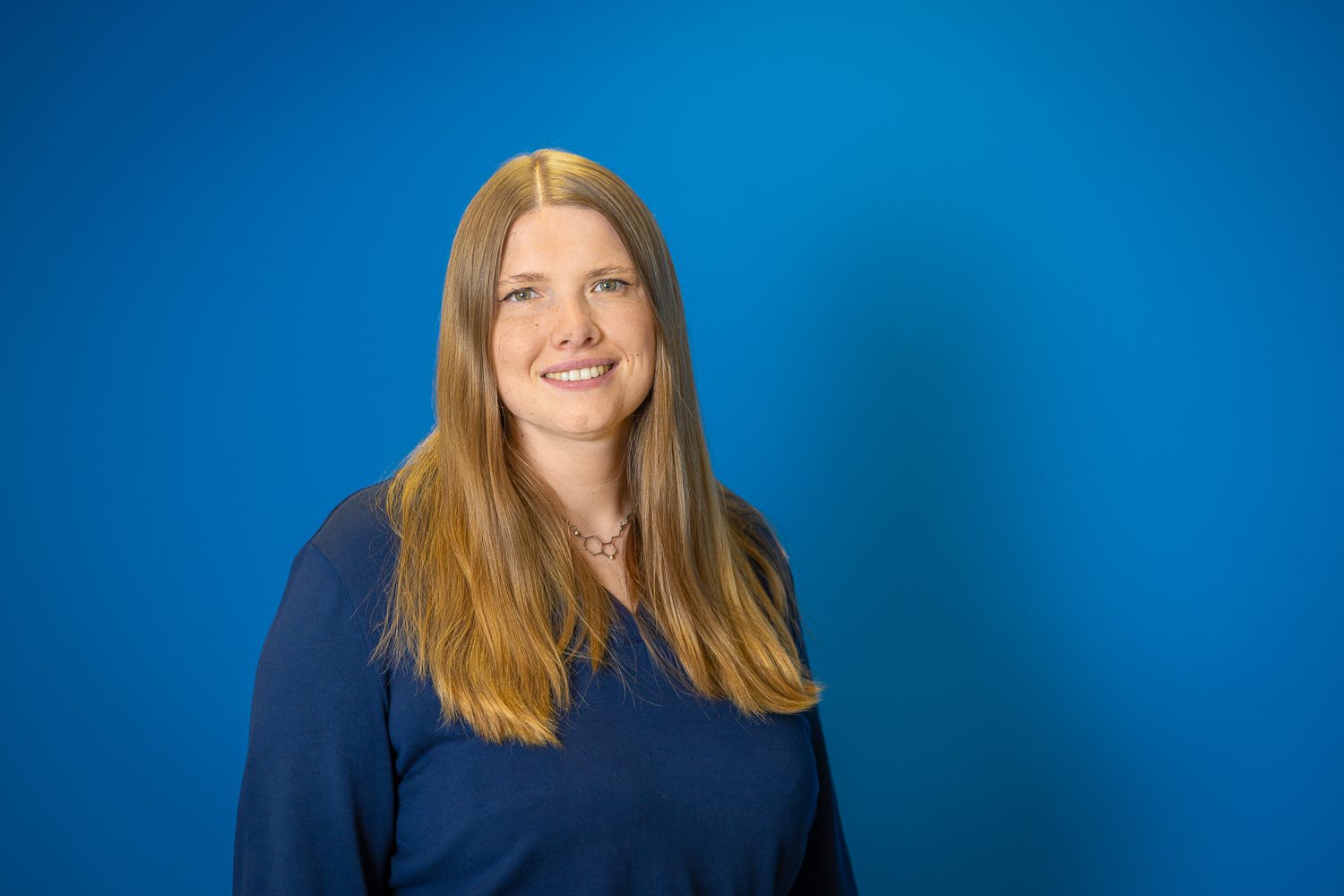
3 Questions for Porelio: »Many well-known companies are very keen to try out our material«
Valuable precious metals are lost through industrial wastewater – and harmful »forever chemicals« can end up in the environment. The start-up Porelio helps companies prevent both. Co-founder and Managing Director Dr Rhea Machado talks about an innovative filter material that Porelio is the first to be able to produce cost-effectively and on an industrial scale.
Ms Machado, what does the FOMS material developed by Porelio do?
For our customers, the recovery of precious metals is particularly important. Palladium and rhodium are very valuable but are lost in dissolved form in wastewater – and current technologies cannot filter them out cost-effectively. It is precisely these treasures that we extract: our material specifically binds the dissolved metals and recovers them from the wastewater. The industry has a keen interest in this. Recovery is also a key component of the circular economy and of the EU’s resilience, enabling it to become less dependent on imports.
The second key application is PFAS, so-called »forever chemicals«. Many filter materials, such as activated carbon or ion-exchange resins, are very effective at removing long-chain PFAS, but the shorter the molecules become, the more difficult it is. This is where we come in as well: with our FOMS material, we provide the final polish and remove even the smallest PFAS molecules. Groundwater and drinking water around the world are contaminated with PFAS, and concentrations are rising.
Whilst PFAS are very important to industry – because, amongst other things, they are grease-repellent, water-repellent and heat-resistant, and do not react readily with other chemicals – they are difficult to break down and are harmful to health even in low concentrations. In hotspots where large quantities of PFAS have been released into the environment, cancer rates are elevated. In the long term, this can also lead to reproductive problems or birth defects. As a society, we must prevent this. Our aim is to treat industrial wastewater to such an extent that none of the 5,000 different PFAS molecules end up in our waterways.
There is also regulatory pressure: stricter rules will come into force in the EU from next year; in future, companies will have to bear 80 per cent of the costs if they pollute the environment with PFAS and these substances need to be removed. The industry is therefore under considerable pressure to find solutions. Many well-known companies are very keen to try out our material – for both applications.
How does the FOMS material manage to bind dissolved precious metals and PFAS so selectively, and how can this be scaled up to an industrial-scale process?
FOMS stands for – and this is a bit of a stretch – functionalised, ordered, mesoporous silicates. Silicates are found, for example, in the small sachets included with new products to absorb moisture. Our material consists of the same basic structure, but has ordered pores, like a honeycomb, which are open at both ends. As a result, liquid flows through it about six times faster than through disordered pore structures, which you can imagine like a sponge. The material is called ‘functionalised’ because it has a surface that we can design to bind specific molecules according to the lock-and-key principle. I often describe this as being like the tentacles of a coral that catch only a specific type of fish. A single gram of our material has an unimaginable surface area of 400 to 800 square metres and can bind a correspondingly large number of molecules.
This enables us to offer our customers a platform solution that we can adapt to a wide range of target molecules: from precious metals such as palladium or rhodium to various PFAS compounds. We redesign the surface for each target molecule – whilst the basic structure and the manufacturing process remain the same.
Until now, it has not been possible to produce our FOMS material in sufficient quantities or cost-effectively enough. Our innovation lies in the fact that we have developed a new synthesis process at the Technical University of Berlin: we can now produce the FOMS material in a matter of seconds rather than days – and in a single step. We have developed a small reactor into which the raw materials flow at the top and from which the product emerges at the bottom, ready for purification. Unlike before, this is a continuous process and proves that production on a tonne scale for industrial use will be both feasible and cost-effective.
You’re currently on the up with Porelio: the Falling Walls Foundation ranked Porelio as one of the most promising start-ups in 2026; you’ve secured pre-seed funding of 2.4 million euros and, at the same time, set up base at the Potsdam Science Park. Why did you choose Potsdam-Golm, and what are your plans here?
After eight years of development, we had to move out of the Technical University of Berlin. In Berlin, Adlershof was the only option, and we saw that there was laboratory space available at the Potsdam Science Park. We came here and were immediately hooked. Potsdam is simply a lovely, green city that also has a lot to offer culturally. For us as a science start-up, the scientific environment at the Potsdam Science Park – with the Fraunhofer Institutes, the Max Planck Institutes and the university – is ideal. Things couldn’t have gone better for us.
The site management knew exactly what our needs were, and we felt welcome straight away. They organise lots of events and help the start-ups connect with one another. It was also important to us that the laboratories here at the GO:IN Innovation Centre were fully equipped; we just had to make a few minor adjustments. It’s like moving to another country and moving into a furnished flat – you can get started straight away. The technical advice was brilliant too.
It was difficult for us to find premises in Berlin or Brandenburg suitable for technical facilities where we could set up our pilot production line, with a view to producing on a tonne-scale by 2027 – our pilot plant is currently located at a different site. We have now found a laboratory that is large enough and is being converted to accommodate our pilot plant. If I could make a wish for start-ups in the capital region, it would be for technical halls, so that ideas can be put into practice here on a large scale. At the Potsdam Science Park, we will continue to optimise our material for commercial use in the laboratory – application by application, from precious metals to PFAS. We’d like to expand here in the future because we feel very much at home here.
Further information can be found on the Porelio-Website.
This blog and the projects carried out by Standortmanagement Golm GmbH at the Potsdam Science Park are funded by the European Union and the State of Brandenburg.
Karen Esser
PR & Communications
karen.esser@potsdam-sciencepark.de + 49 331 237 351 103