New Innovation Strategy for the Berlin-Brandenburg Capital Region Adopted – “InnoBB 2035” presented at Potsdam Science Park
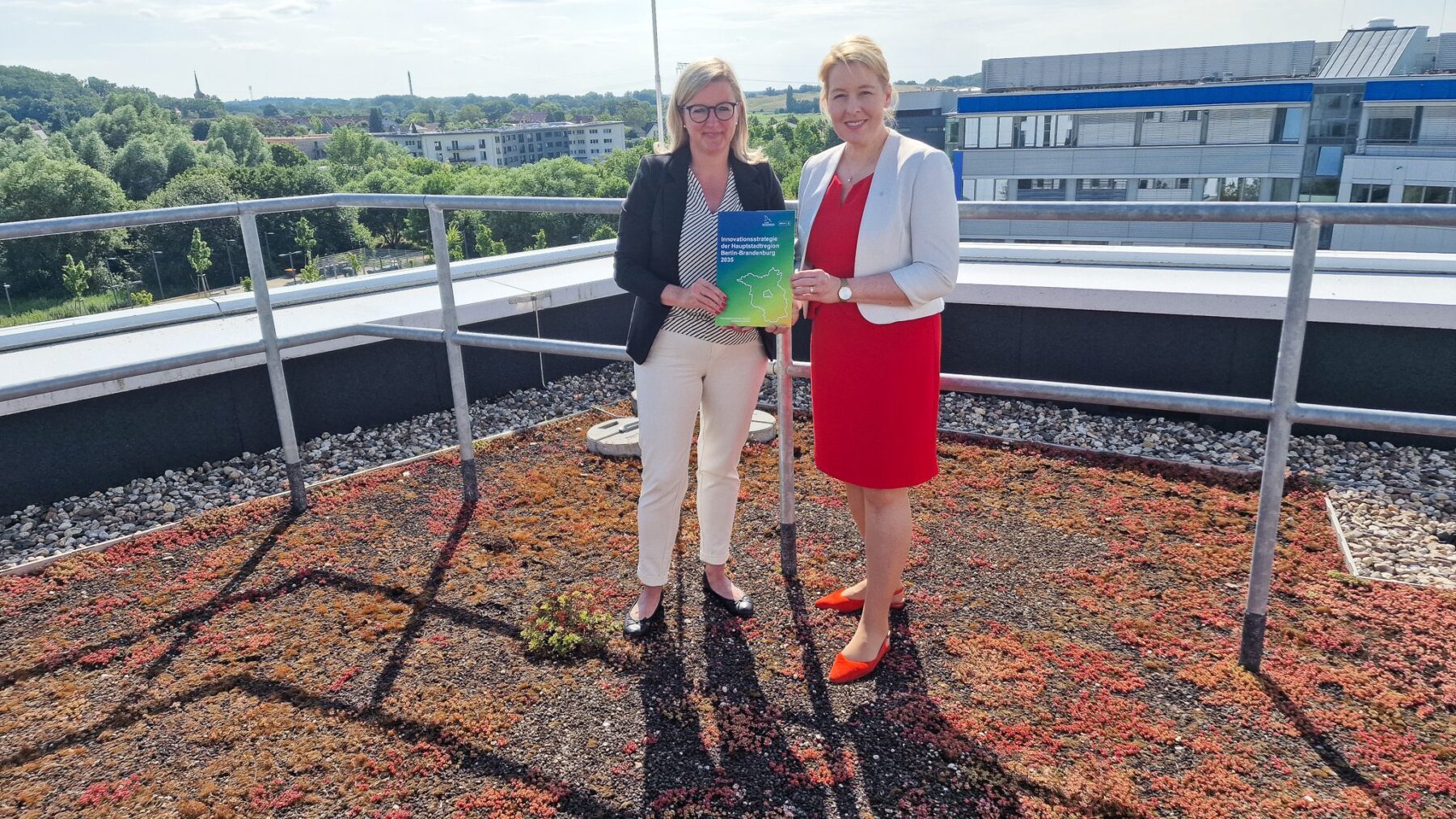
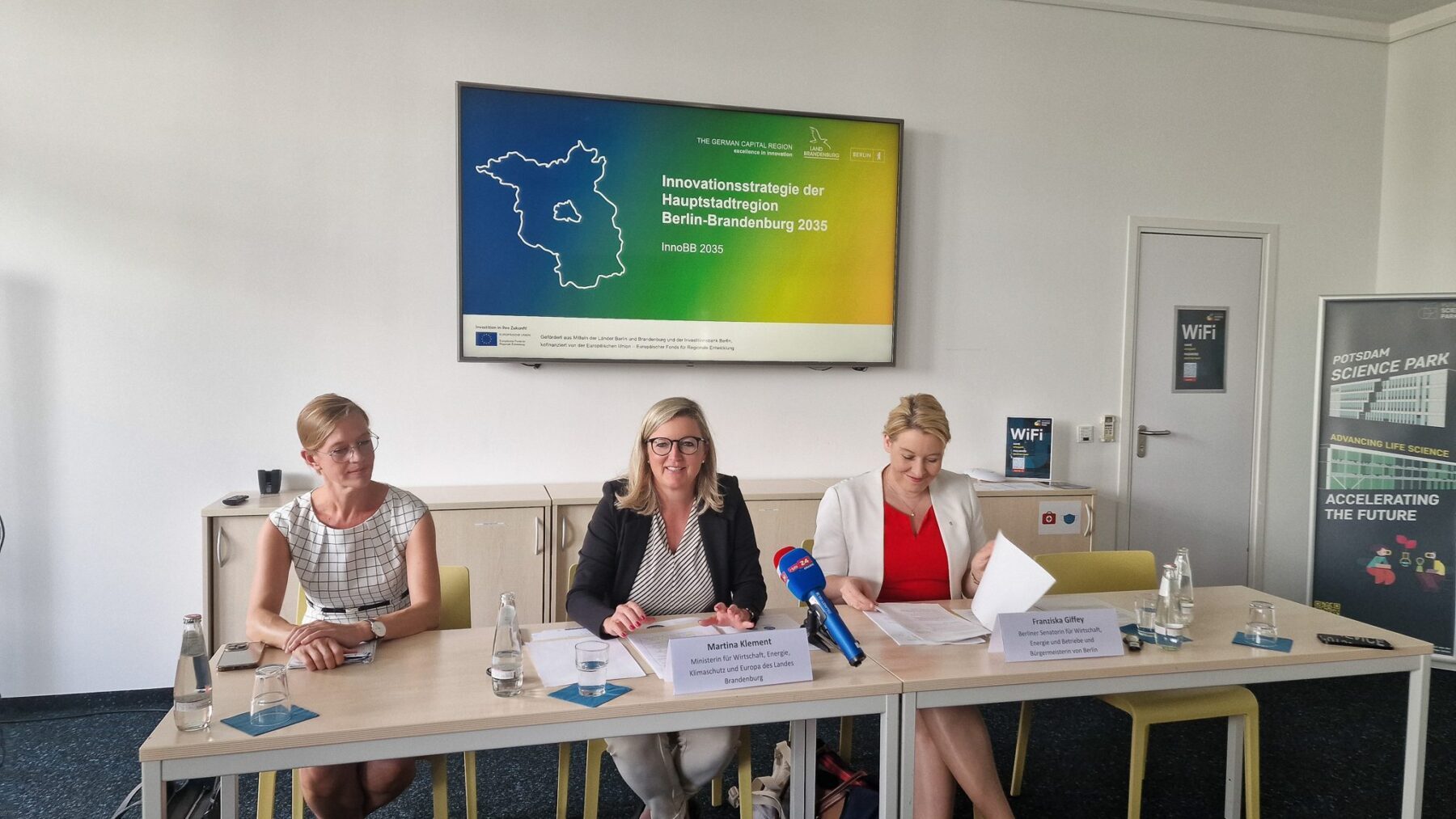
Ministry for Economic Affairs, Energy, Climate Protection and Europe (MWEKE) of the State of Brandenburg | The Berlin Senate and the Brandenburg State Government today adopted the new “Innovation Strategy for the Berlin-Brandenburg Capital Region 2035” (InnoBB 2035). In doing so, the two states are continuing their cooperation in innovation policy, which has existed since 2011, and adapting it to current challenges and potentials. The aim is to jointly strengthen the innovation location, drive forward the necessary transformation, and actively shape the future of the region.
Innovations for a Strong and Future-Proof Region
With the new strategy, Berlin and Brandenburg are focusing on solutions that sustainably improve the region’s competitiveness and resilience. It was developed in close coordination with regional stakeholders from business, science, and administration. With its topic-oriented approach, it brings forces together to effectively address key challenges such as digital transformation, climate protection and resource efficiency, demographic change, social participation, and security.
Five Future Fields as Drivers of Innovation
The strategy defines five central future fields that reflect the economic dynamism and scientific excellence of the capital region and bundle its specific strengths and potentials. The five future fields are:
- Innovative mobility
- Digital technologies & creative tech
- Health & participation
- Smart energy systems
- Innovative sustainable production & materials
The key starting points for strengthening the innovation ecosystems in the future fields mentioned are the following four success factors:
- Knowledge and technology transfer,
- Corporate innovation culture & entrepreneurship,
- Lifelong learning & new forms of work, as well as
- Innovation-friendly framework conditions
Cross-border cooperation among innovation stakeholders is of central importance in this context in order not only to develop innovations in these future fields, but also to bring them into application and scaling.
The cross-state cooperation between Berlin and Brandenburg can be seen in numerous projects within the capital region’s innovation ecosystem:
For example, the major European project APECS Pilot Line (“Advanced Packaging and Heterogeneous Integration for Electronic Components and Systems”), in cooperation with leading research institutes in the region, is developing new manufacturing methods and processes in microelectronics. These contribute to improving Europe’s independence and performance in this key technology. The consortium is coordinated by the Fraunhofer Research Fab Microelectronics in Berlin and, in addition to European partners, includes several institutes of the Leibniz Association and the Fraunhofer-Gesellschaft in Berlin and Brandenburg.
Another example is the Zukunftswerkstätten Innovative Versorgung. This joint event format of the states of Berlin and Brandenburg is aimed at stakeholders in outpatient and inpatient care, health insurers, and health administration.
The Berlin-Brandenburg Battery Forum, which took place for the sixth time this year, offers stakeholders from the capital region a valuable platform for networking, exchange, and cooperation. This and other cross-state formats are also intended to contribute to strengthening the regional innovation ecosystem in the future.
Alignment with European and National Guidelines
As a Smart Specialisation Strategy (S3), InnoBB 2035 is the central basis for the use of funds from the European Regional Development Fund (ERDF). It takes up the specific strengths and potentials of the innovation ecosystem of the capital region and is consistently aligned with European and national innovation guidelines. This ensures synergies between regional, national, and European initiatives and, through innovation, contributes in the long term to securing competitiveness and innovation capacity throughout the entire capital region. At the same time, it can provide impetus for economic and social transformation processes – in the region, in Germany, and in Europe.
Together for the Future
Senator for Economics, Energy and Public Enterprises Franziska Giffey: “Berlin and Brandenburg are home to future-oriented industries that generate innovations. This is also one reason why both federal states are performing better economically than the national average in a Germany-wide comparison. We want to continue bringing the best minds and hands to the capital region and to be at the forefront of European competition. That is why we continue to rely on the strong cooperation between Berlin and Brandenburg. Together, we want to continue offering the best framework conditions for innovations and thereby also hold our own in the competition for EU funding.
Minister for Economic Affairs, Energy, Climate Action and Europe Martina Klement: “In the competition for the technologies of tomorrow, Berlin and Brandenburg can only fully unfold their strength together. That is why we consistently focus on regional innovation ecosystems. SMEs are a decisive driver in this regard: they bring ideas into application, drive innovations across the region, and create added value locally. Our goal is clear: innovations must not end at city borders, but must create technological competence, good jobs, and new growth opportunities in all parts of Brandenburg.”
Innovation Location Potsdam Science Park
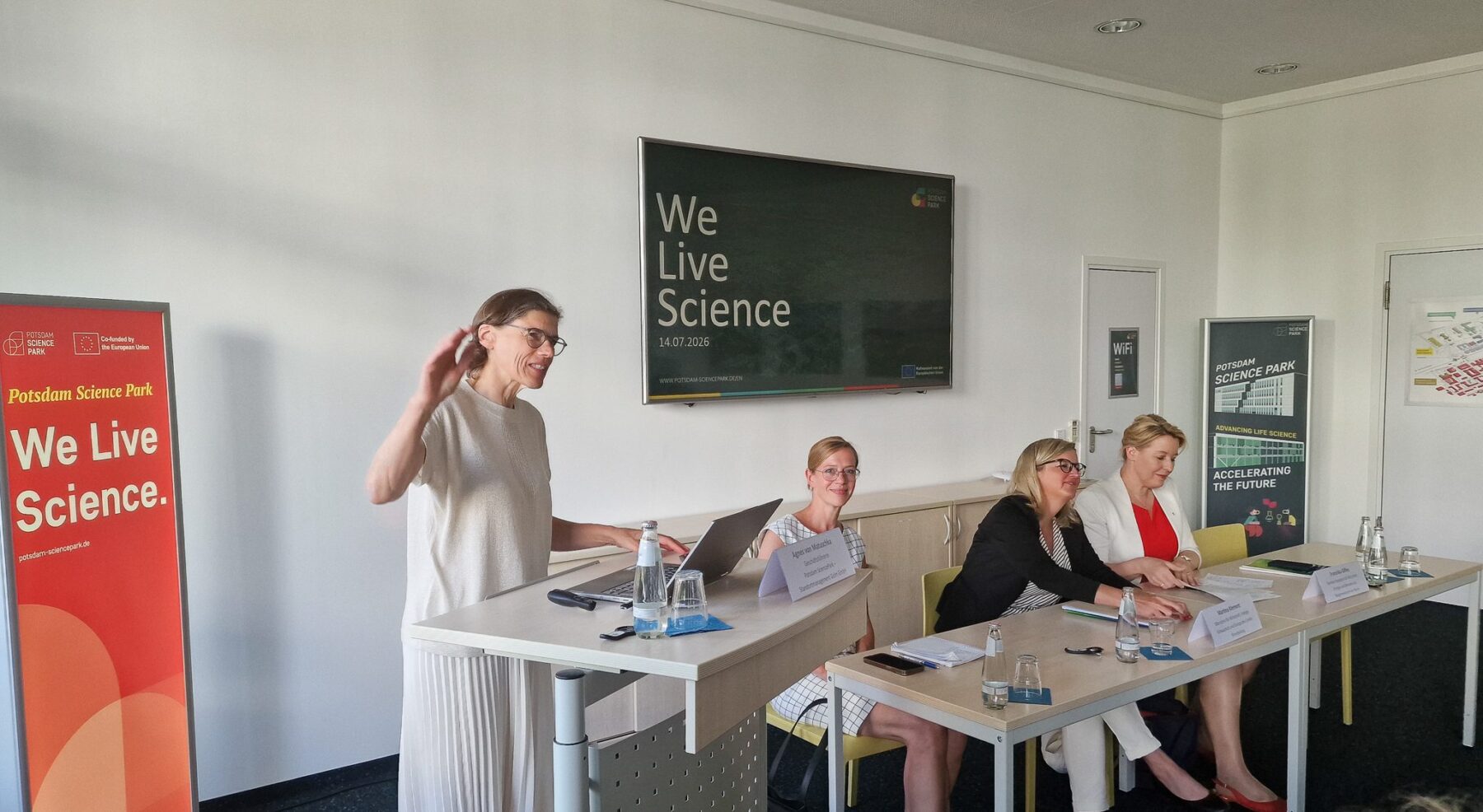
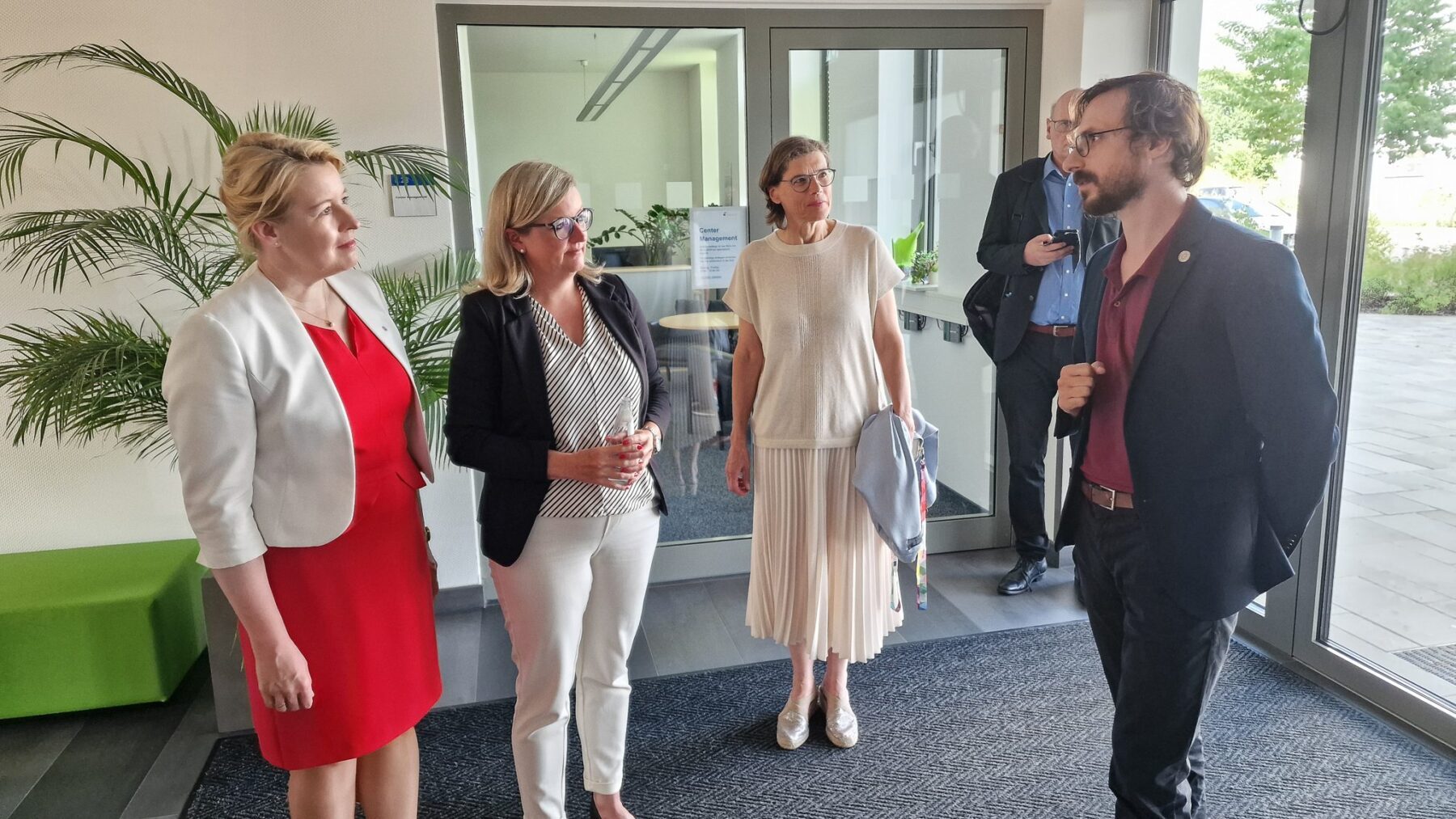
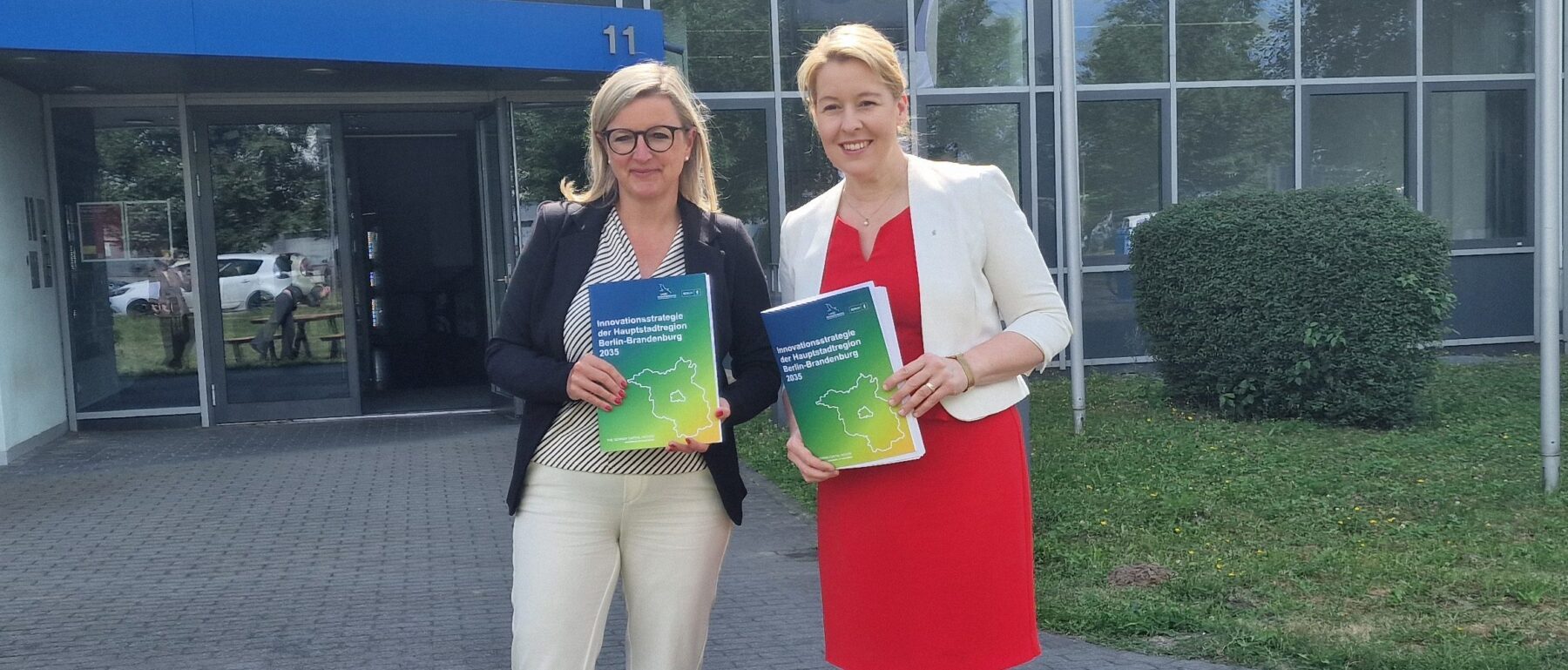
The presentation of the new “Innovation Strategy for the Berlin-Brandenburg Capital Region 2035” (InnoBB 2035) by Berlin’s Senator for Economic Affairs Franziska Giffey and Brandenburg’s Minister for Economic Affairs Martina Klement took place today at Potsdam Science Park. The Potsdam innovation location is Brandenburg’s largest campus for science and research. It is home to the University of Potsdam, two Fraunhofer Institutes, and three Max Planck Institutes. Across an area of around 50 hectares, a dynamic ecosystem for life sciences and biotechnology is developing here, now comprising more than 50 research-oriented companies.
The complete innovation strategy will be available for download on the Berlin-Brandenburg capital region website from 14 July 2026.
Impressionen